
Our Approach
Understanding the child comes first.
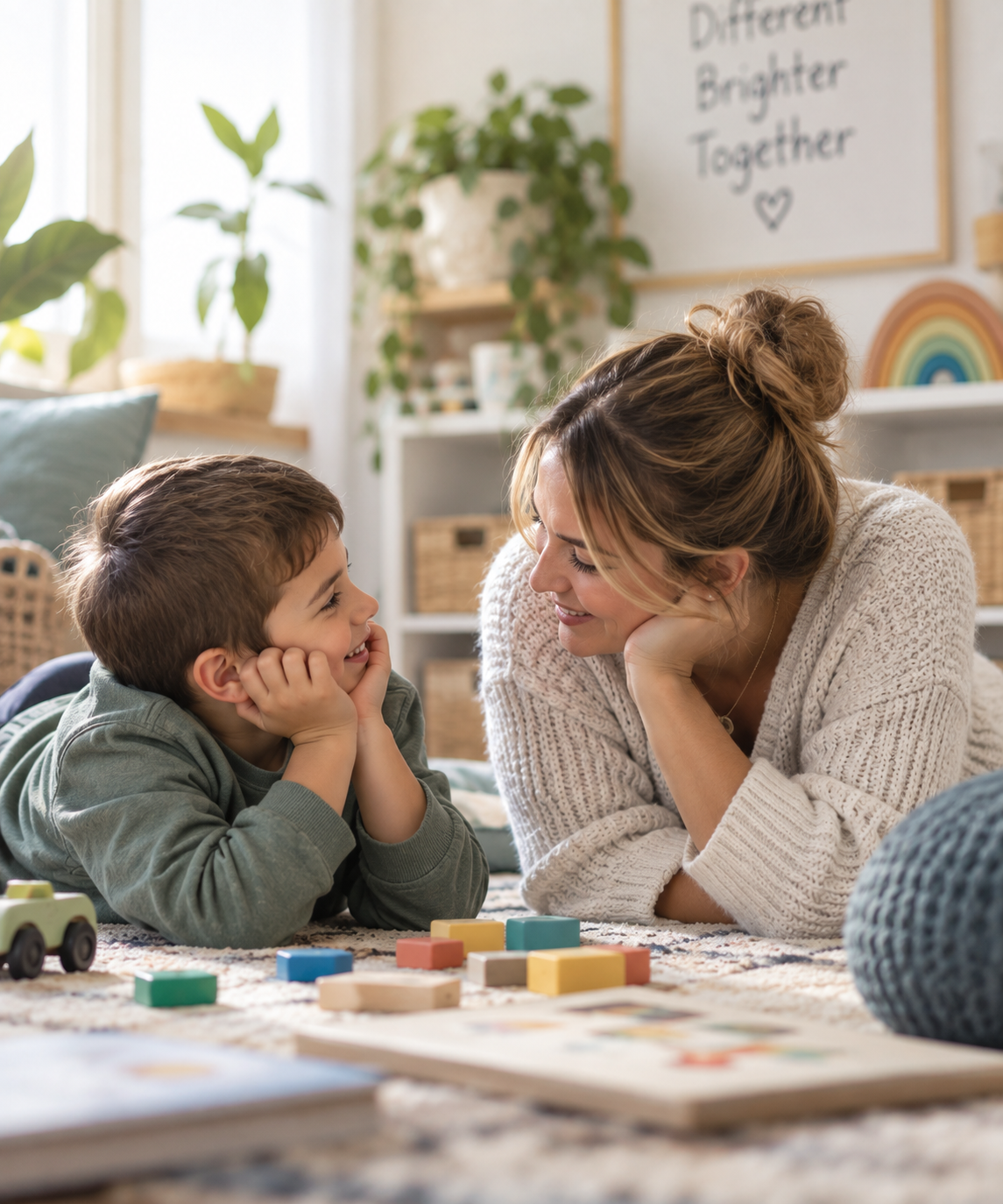
At Little Hands Big Hearts, meaningful support begins with understanding the whole child — not simply their diagnosis or behaviour. I take the time to understand their strengths, communication, sensory needs, relationships, experiences and environment, and to consider what their behaviour may be communicating.
The Little Hands Big Hearts Principles
These nine principles guide the way I work with children and families. They are not a set of rules or a one-size-fits-all approach. They help keep the focus where it belongs — on understanding the child, supporting the family and creating meaningful opportunities for connection, growth and success.
They are shaped by evidence and professional experience, but also by something equally important — the children and families who continue to teach me every day.
1. Every Child Can Learn
Every child can learn and grow, but not always in the same way or at the same pace. I focus on finding the pathway and support that helps each child experience success.
2. Behaviour is Communication
Behaviour gives us information about what a child may be experiencing or trying to communicate. Rather than simply trying to stop a behaviour, I look at why it may be happening and what the child might need.
3. Connection Comes First
Strong relationships create the foundation for meaningful support. I take the time to build trust, follow the child’s interests and create a relationship where they feel safe, valued and understood.
4. The Right Support at the Right Time
Children need different kinds of support at different times. I adjust support to meet the child where they are — providing more help when it is needed and gradually stepping back as confidence and skills grow.
5. Confidence Grows Through Success
Children build confidence when they experience success. I create achievable steps, recognise progress and build on what is already working so children can develop the confidence to keep trying.
6. We Become a Team
Families know their child in ways no professional ever can. I bring professional knowledge and experience, while families, teachers and other supports bring their own perspectives. By working together, we build a clearer understanding of the child and more consistent support.
7. Progress Isn’t Always Obvious
Progress doesn’t always happen in a straight line. I look for meaningful changes — in confidence, communication, coping, recovery and participation — and adjust support as each child grows and their needs change.
8. See the Child First
Every child is more than their diagnosis, behaviour or challenges. I begin with their strengths, interests, personality and the things that make them who they are, then build support around the whole child.
9. Never Stop Learning
Every child teaches us something. I stay curious, reflect on what is and isn’t working, and keep adapting my approach as I learn more about the child and what they need to succeed.
Want to explore our approach in more depth?
The Little Hands Big Hearts Handbook explores the nine principles that guide our practice, how we understand behaviour, and what this approach looks like when supporting children and families.
What This Means for Your Child
Your child won't be expected to fit into a program or a predetermined way of doing things. Support is shaped around who they are, what matters to them and what they need to feel safe, connected and successful.
That means taking time to understand before making changes, building on strengths rather than focusing only on difficulties, and working alongside the people who know your child best.
The goal isn't to change who your child is. It's to help them understand themselves, build confidence and develop the skills to communicate and advocate for what they need.